Last Updated: 2 November 2026
Quick Summary
The cost of a consumer unit replacement depends on the number of circuits, the protective devices chosen, the condition of the existing wiring and any extra work needed. Quotes should be itemised so each element can be compared fairly.
- Protective devices such as RCBOs usually affect price more than the enclosure itself.
- Ask for each option, including surge protection, to be priced separately.
- A good quote separates labour, materials, testing, certification and VAT.
- Replacement is strongly recommended where the board shows overheating, burning or dangerous defects.
- Check that your electrician is registered with a competent person scheme before work begins.
Table of Contents
- What a Consumer Unit Replacement Typically Costs
- What Drives the Final Price of a Consumer Unit Replacement
- Consumer Unit Replacement Quote: What It Should Include
- RCD Consumer Unit Cost and RCBO Versus Other Protective Devices
- How Long a Consumer Unit Replacement Takes
- Consumer Unit Regulations, Certification and When Replacement Is Necessary
- Booking Your Consumer Unit Replacement With MDS Electrical
- Frequently Asked Questions
If you have asked for a quote on a new consumer unit, you have probably noticed that prices vary widely. This guide from MDS Electrical explains what drives the cost of replacing a consumer unit in the UK, what a fair quote should contain, and what to check before you agree to any work. We cover fuse boards, RCD and RCBO protection, and the regulations that govern the job.
What a Consumer Unit Replacement Typically Costs
A consumer unit is the board that distributes power around your home and houses the protective devices that switch off a circuit when something goes wrong. Replacing an old fuse box with a modern consumer unit is one of the most common safety upgrades in homes here, and it is also one of the most inconsistently quoted jobs in the trade. Two electricians can look at the same cupboard and come back with figures that differ by several hundred pounds, because the headline price hides choices about protection, testing and making good.
Pricing depends on the number of circuits, the protective devices chosen, the condition of the existing wiring and any additional work required, so no single figure applies to every property. Electrical rewiring costs and what to expect gives a wider view of the work a property may need. The only figure that matters is the one written on your itemised quotation, and current prices are available from MDS Electrical on request.
Typical cost ranges by type of consumer unit
Consumer units come in several configurations, and the protective devices inside them are the main driver of material cost, not the metal or plastic enclosure. A basic board with standard miniature circuit breakers (MCBs) and a couple of RCDs sits at the lower end. A full RCBO board, where every circuit has its own combined device, costs more in materials but limits nuisance tripping to a single circuit. Adding a Type 2 surge protection device adds a further modest amount to the materials line.
A useful way to read a quote is to separate the fixed elements from the variable ones. The enclosure, the main switch and the SPD are broadly fixed costs whatever the property. The number of RCBOs or MCB ways scales with the circuits in your home, and the labour scales with access and remedial work. If a quote gives you one round number, you cannot tell which of those three you are actually paying for.
Fuse box versus consumer unit: what the terms mean
People often use “fuse box” and “consumer unit” to mean the same thing, but they describe different generations of equipment. An older fuse box uses rewirable fuses or cartridge fuses to protect each circuit. A consumer unit uses circuit breakers, which trip and can be reset, and usually adds RCD protection. The modern term is the one you will see on quotes and certificates, so it helps to understand both before you compare prices. If a quote refers only to a “fuse box replacement”, ask what protective devices are actually being fitted, because the phrase tells you nothing about the level of protection you are buying.
What Drives the Final Price of a Consumer Unit Replacement
!A qualified electrician opening a grey domestic consumer unit cover in a hallway
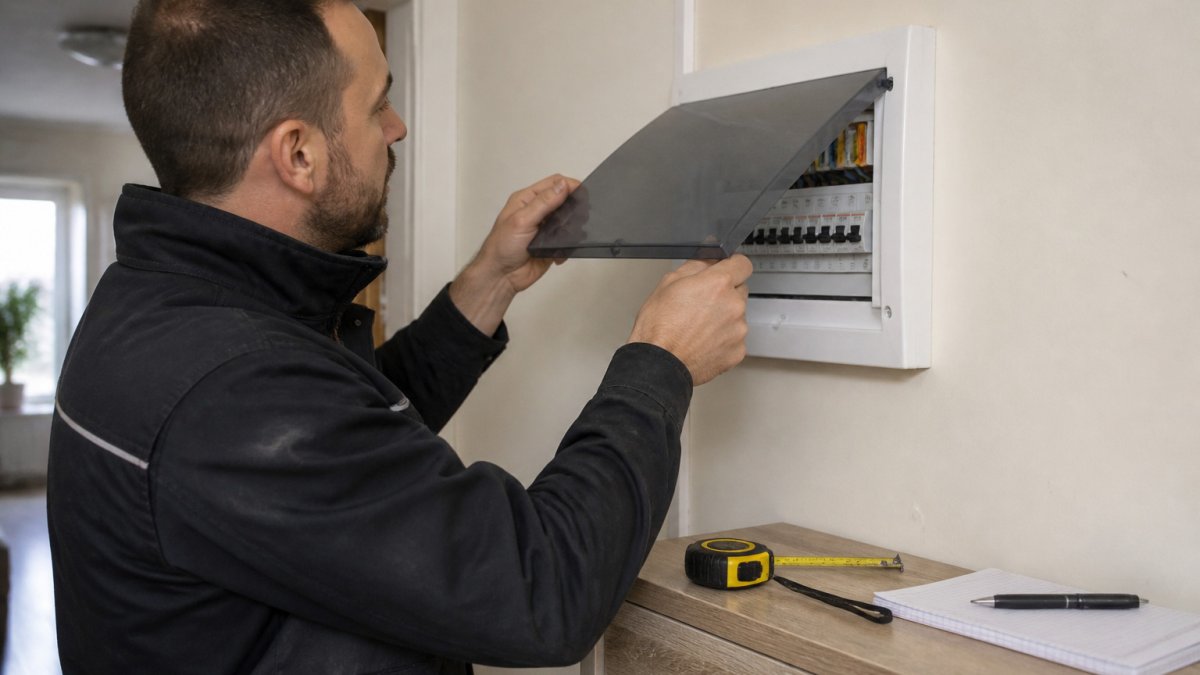
Several factors shape the final figure, and they are worth discussing with your electrician before work begins. The size of the property and the number of circuits matter, because more circuits mean more devices and more labour. The condition of the existing wiring is another factor, since older cabling may need remedial work before a new board can safely be connected. Access also affects time on site: a board in a cupboard is quicker to change than one buried behind plasterboard.
Some quotes also reflect whether the job includes making good, testing, certification and notification. None of this makes one quote automatically better than another. It does mean that a low figure may simply leave out work that you will need later.
Consumer Unit Replacement Quote: What It Should Include
A useful quote is detailed enough that you can see what you are buying. It should name the consumer unit, list every protective device, state whether surge protection is included, and show labour and materials separately. It should also say whether VAT is included, and whether certification and the notification of the work to the relevant building control body are part of the price.
Be cautious about quotes that give one round number with no breakdown. You cannot compare them fairly with other quotes, and you may find extra charges appearing later.
An itemised example quote
Here is an illustrative layout of what a transparent quote might look like. The figures are placeholders, not prices, and your own quote will depend on your property.
| Item | Detail | Cost (GBP) |
|---|---|---|
| Consumer unit | Board with specified number of ways | [quoted figure] |
| Protective devices | RCBOs or RCDs and MCBs per circuit | [quoted figure] |
| Surge protection device | Type 2 SPD, if included | [quoted figure] |
| Labour | Removal of old board and installation | [quoted figure] |
| Testing and certification | Installation certificate | [quoted figure] |
| VAT | Where applicable | [quoted figure] |
Ask for each line to be filled in before you commit.
RCD Consumer Unit Cost and RCBO Versus Other Protective Devices
RCD stands for residual current device. It detects imbalances in the current and cuts power quickly, which protects people from electric shock. An RCBO combines an RCD with an overcurrent breaker for a single circuit, so a fault on one circuit does not disconnect the whole house. Choosing RCBOs costs more than using a single RCD protecting several circuits, but it limits the disruption when a fault occurs. Read about the benefits of RCD protection installation to see the full picture of what it involves and delivers.
Surge protection devices, or SPDs, guard the installation against voltage spikes, for example from lightning or switching on the grid. They add cost, and whether they are essential depends on your location and the equipment you use. Discuss the trade-off with your electrician rather than accepting or refusing them by default.
How Long a Consumer Unit Replacement Takes
For a standard domestic property, the physical swap of the board is often completed within a working day, though timings depend on the number of circuits and any remedial work found. Testing and paperwork add further time. Your electrician should give you an estimated duration in writing so you can plan around the work.
What happens during the replacement, step by step
A typical replacement follows a clear sequence. First, the electrician isolates the supply and checks that the circuits are dead. Next, the old board is removed and the cables are inspected and terminated in the new unit. The new devices are fitted and labelled, the installation is tested, and the results are recorded on the certificate. Finally, the electrician should walk you through the new board and explain how to reset a tripped device safely.
Consumer Unit Regulations, Certification and When Replacement Is Necessary
In England and Wales, electrical work in dwellings must comply with Part P of the Building Regulations, and the wiring standard BS 7671 (the IET Wiring Regulations) sets out the technical requirements for installations. Work carried out by a registered competent person can be self-certified, and the installer should provide an electrical installation certificate. Your electrician should confirm how notification is handled for your area. In Scotland the building standards system applies instead, and in Northern Ireland the relevant building control regime applies, so the notification route differs depending on where the property is.
Certification and notification: what you should receive
Consumer unit work is generally notifiable in England and Wales, and it should be either self-certified by a registered competent person or notified to the local authority building control body before work starts. Once the job is finished, the installer should provide an Electrical Installation Certificate (EIC) for the replacement, together with the accompanying test results. The certificate records the protective device ratings, the test readings and the date of the work, and it is the document a future buyer’s solicitor or a landlord’s safety check will ask for.
You can verify that an electrician is registered by checking their details with the competent person scheme they claim to belong to. The scheme’s online register will confirm the registration and the scope of work covered. A quote that offers to “certify” the work without naming a scheme or producing a certificate number is a warning sign, because self-certification depends on registration, not on a promise.
When replacement is necessary versus optional
Replacement is not always compulsory. An older board may still be safe and working correctly, and some homeowners upgrade in stages. The decision usually comes down to whether there is a specific safety concern or whether the upgrade is discretionary.
Replacement is strongly recommended where the board shows signs of overheating or burning, where it contains rewirable fuses with no RCD protection on socket circuits, where it has been damaged or contaminated, or where an electrician has recorded dangerous defects on an Electrical Installation Condition Report (EICR). Check whether your fuse box is safe before deciding what to do next. It is also the practical route where a new circuit or a major alteration cannot be protected adequately within the existing board.
If you rent out a property, the condition of its electrics will also matter for your electrical safety obligations as a landlord, and the certificate you receive after a replacement is part of the evidence you will need to keep.
Booking Your Consumer Unit Replacement With MDS Electrical
MDS Electrical can provide itemised quotes so you can see what each element of the work costs. If you are in Peterborough or the surrounding area and want a clear price for a consumer unit replacement, request a quote from MDS Electrical to start the conversation.
Frequently Asked Questions
How much does it cost to replace a consumer unit?
A straightforward domestic consumer unit replacement is commonly quoted within a broad range, but the final figure depends on the number of circuits, the protective devices chosen, the condition of the existing wiring and whether additional work such as earthing or surge protection is required. Pricing varies between properties and between electricians, so MDS Electrical provides a written quote after an assessment of your property. Ask for the materials and labour to be itemised so you can compare like for like, and request a current quote from MDS Electrical for an accurate figure.
How long does a consumer unit replacement take?
The timescale depends on the number of circuits, access to the existing board and whether any rewiring or remedial work is found. During the job the power is switched off for parts of the day, and the electrician will test each circuit before the installation is signed off. Confirm the expected duration when you receive your quote.
Does a consumer unit replacement need to be certified?
Consumer unit work in England and Wales is covered by Part P of the Building Regulations, and electrical work must be designed, installed and inspected to BS 7671, the wiring regulations. A qualified electrician can self-certify the work through a registered scheme and issue an Electrical Installation Certificate, which is a useful document to keep when you sell or let a property. Ask for certification details as part of the quote.
Is an RCD consumer unit worth the extra cost?
An RCD consumer unit fits residual current protection to circuits, which can disconnect power quickly when a fault to earth is detected and helps reduce the risk of electric shock and fire. RCBOs combine RCD and overcurrent protection on each circuit, so a fault on one circuit does not cut power to the whole property. The added cost of RCBOs over a simpler board depends on the number of circuits, and MDS Electrical can explain which arrangement suits your property.