Last Updated: 28 October 2026
Quick Summary
An EICR inspection covers the fixed electrical installation in a property: the permanent wiring, the consumer unit, sockets, switches and lighting circuits. A competent person tests and inspects these and records any defects in a written report. It does not test portable appliances such as kettles or washing machines.
- Testing covers the consumer unit, RCDs, and each circuit’s continuity and insulation resistance.
- A typical three-bedroom house takes between two and four hours to inspect.
- Observations are coded C1, C2, C3 or FI, indicating how serious each defect is.
- An overall unsatisfactory result means at least one C1 or C2 code was found.
- Portable appliances, fire alarms and gas installations fall outside the scope of an EICR.
Table of Contents
- What an EICR Inspection Is and Why It Matters
- The Fixed Electrical Installation: What Is Tested
- EICR Inspection Checklist: Step by Step
- How Long Does an EICR Take?
- EICR Codes Explained: C1, C2, C3 and FI
- What Is Not Covered by an EICR
- Booking Your EICR and Acting on the Report
- Frequently Asked Questions
What an EICR Inspection Is and Why It Matters
An electrical installation condition report (EICR) is a formal inspection and test of the fixed electrical wiring in a property, carried out by a competent person and recorded on a written report. It tells you whether the installation is safe to keep in use, and where it falls short, what needs fixing and how urgently. For landlords, an EICR can be part of meeting electrical safety requirements. Check current official guidance for the requirements that apply to your property. Electrical Safety Standards in the Private Rented Sector (England) Regulations 2020
Homeowners often assume that a working socket means a safe installation. It does not. Wiring deteriorates with age, loose connections build up heat, and older consumer units may lack the protection that modern circuits rely on. HSE guidance on electrical safety and fixed wiring inspection
The Fixed Electrical Installation: What Is Tested
An EICR covers the fixed installation: the permanent wiring, the distribution equipment and the accessories built into the structure. It does not test your appliances, such as the kettle, washing machine or television. Those are outside the scope of an EICR.
Consumer unit and distribution board
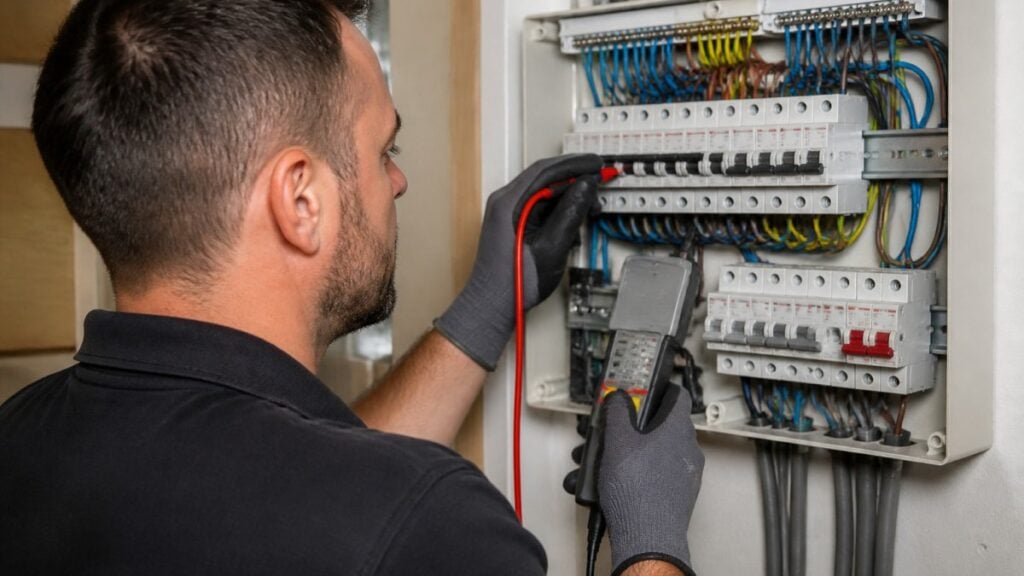
The consumer unit, or fuse board, is the heart of the installation, and it is often where the most important findings are made. The inspector checks that it is in good physical condition, that the main switch and circuit breakers operate correctly, and that residual current devices (RCDs) are present and tested. Older units with rewirable fuses or no RCD protection are a common reason for an unsatisfactory result. A tripping breaker is also a sign to investigate rather than reset repeatedly, because it means a fault is present somewhere on that circuit.
Sockets, switches and lighting circuits
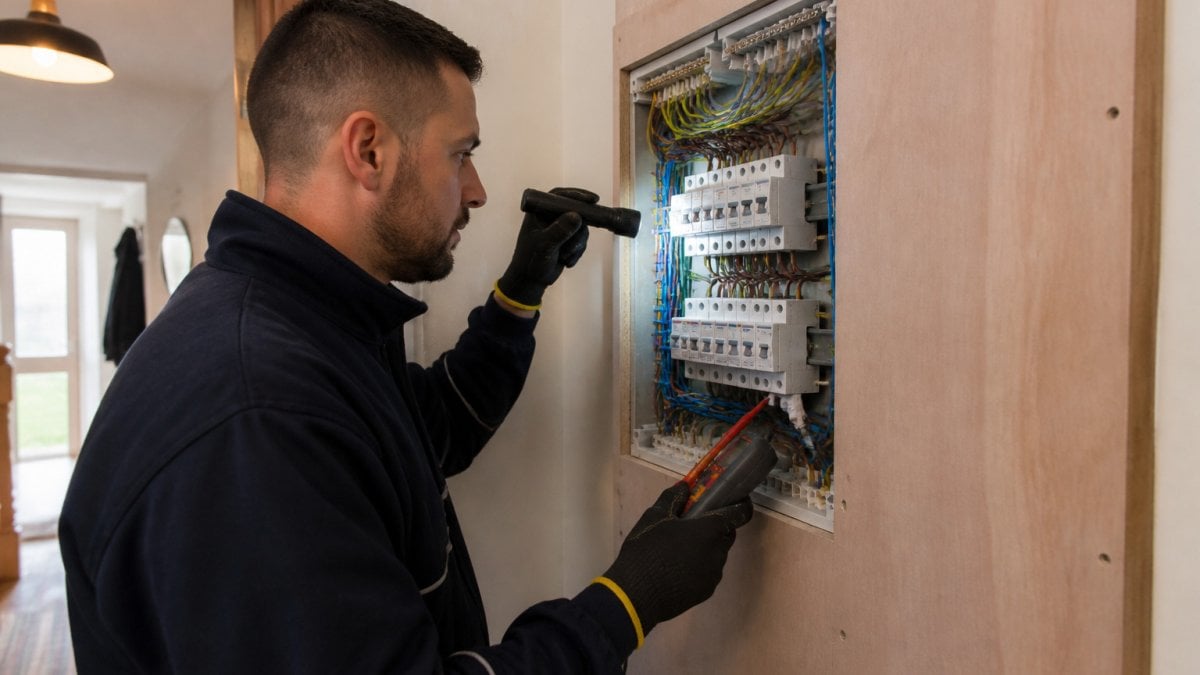
Each circuit is tested for continuity, insulation resistance and the effectiveness of its protective devices. The inspector looks for signs of overheating, damaged or loose sockets, scorch marks, and wiring that has been altered without proper work. Lighting circuits are checked in the same way, and the condition of the cable runs and their fixings is inspected where it can be seen.
EICR Inspection Checklist: Step by Step
- Take a record of the installation, including the age, type and number of circuits.
- Inspect the consumer unit and its labelling.
- Check the main earthing and bonding connections.
- Test the RCDs and confirm their trip times.
- Test each circuit for continuity and insulation resistance.
- Check polarity and the effectiveness of protective devices.
- Inspect sockets, switches, light fittings and visible cabling for damage.
- Record every observation, classify each one, and issue the report.
How Long Does an EICR Take?
For a typical three-bedroom house, an EICR usually takes between two and four hours, depending on the size of the installation and how accessible the wiring is. Larger homes, properties with extensive additions, and commercial premises take longer. Access matters as much as size: if the inspector cannot reach the consumer unit or the loft and cellar, the job takes longer and some areas may need to be noted as not inspected. Expect the report itself to follow within a few days of the visit.
EICR Codes Explained: C1, C2, C3 and FI
Every observation on an EICR is given a code that indicates how serious it is and what action is needed. The codes are:
- C1 (Danger present): an immediate risk of injury. The installation must be made safe straight away, usually by isolating the affected circuit.
- C2 (Potentially dangerous): a defect that could become dangerous. It requires urgent remedial work.
- C3 (Improvement recommended): the installation does not meet current standards in a way that is not immediately dangerous. Improvement is advised but not mandatory.
- FI (Further investigation): the inspector could not confirm safety without more testing, so further work is needed to reach a conclusion.
An overall result of “unsatisfactory” means at least one C1 or C2 code was found. A report with only C3 codes can still be satisfactory. If you have received a report with C1 or C2 codes, act on it promptly, because the codes describe a risk to the people living in or using the building.
Each observation on an EICR carries a code showing how serious it is and what action is needed.
| Code | Meaning | Action needed |
|---|---|---|
| C1 | Danger present | Make safe immediately, usually by isolating the circuit |
| C2 | Potentially dangerous | Urgent remedial work required |
| C3 | Improvement recommended | Advised but not mandatory |
| FI | Further investigation | More testing needed to confirm safety |
What Is Not Covered by an EICR
An EICR is a fixed-wiring inspection, and it has clear limits. It does not test portable appliances, so a faulty kettle or extension lead sits outside its scope. It does not assess the building’s fire alarms, gas installations or structural condition. It also does not guarantee the installation will remain safe over time, since the report reflects the condition on the day of inspection. Some areas may be excluded if they were covered by furniture, sealed behind plaster, or otherwise inaccessible, and the report should say so clearly.
Booking Your EICR and Acting on the Report
Before booking, ask for a written quote that states what the inspection includes.
When the report arrives, read the observation codes first, then the overall result. Keep the report and records of any remedial work. Homeowners benefit from keeping the report with their property documents, since it shows the condition of the installation at the time of the inspection.
If you are in Peterborough or the surrounding area and want to find out when your circuits were last checked, you can check when your electrical circuits were last tested. Where a failed report includes C1 or C2 codes, our guide to what happens after a failed EICR explains the next steps. Landlords preparing for compliance can read our EICR certificate requirements for landlords. When you are ready to act, you can request a quote from MDS Electrical directly.
Frequently Asked Questions
What does an EICR inspection cover?
An EICR, or Electrical Installation Condition Report, is a formal assessment of a property’s electrical systems. For details of what an inspection covers, check with the electrician carrying it out.
Does an EICR inspect every socket and light?
The inspection scope and the points checked should be confirmed with the electrician carrying it out.
What can cause a property to fail an EICR?
An EICR report records any findings and indicates whether remedial work is needed. Ask the electrician who carried out the inspection to explain the findings in your report.
Does an EICR include appliances?
The scope of an EICR should be confirmed with the electrician carrying it out.
What happens if an EICR identifies a problem?
MDS Electrical can advise on electrical work required and provide a quote, which you can request through the website.