Last Updated: November 8, 2026
Quick Summary
If your electrics trip, the usual cause is an overloaded circuit, a faulty appliance, or a wiring fault. Work out which switch has tripped, unplug appliances on that circuit, then reset and test them one at a time. Call an electrician if the breaker will not reset.
- Too many high-power appliances on one circuit is the most common cause of trips.
- An RCD trip usually signals an earth fault or a faulty appliance, not a fault in the RCD.
- Unplug everything on the affected circuit, reset, then add appliances one at a time.
- Do not keep resetting a breaker that trips straight away; leave it off and call an electrician.
- Book an electrician if trips are getting more frequent or you see burning or scorch marks.
Table of Contents
- Why Your Electrics Keep Tripping: The Main Causes
- Understanding Which Switch Has Tripped: MCB, RCD or RCBO
- Why Does My RCD Keep Tripping?
- How to Find an Appliance Causing a Power Trip
- What to Do When the Fuse Box Trips
- When to Book an Electrician for Tripping Electrics
- Frequently Asked Questions
Few things are more frustrating than a power cut that hits only part of your home. If your electrics trip when you run the kettle, the microwave or the washing machine, the cause is usually a circuit being overloaded or a fault that needs finding, and most electrics trip for one of a handful of common reasons. This guide walks you through the common causes, how to tell which switch has tripped, and the simple checks you can do yourself before you call in an electrician.
Why Your Electrics Keep Tripping: The Main Causes
A trip is a safety device doing its job. The switch cuts the power when the current is too high or when electricity is leaking somewhere it should not. Knowing why it happened is the first step to stopping it happening again.
The most common reasons are simple. Too many appliances on one circuit, a faulty appliance, or a wiring fault. Work through them in that order and you will often find the answer quickly.
Overloaded circuits and too many appliances
An overloaded circuit is the most common cause. Each circuit in your home can only carry so much current. When you run several high-power appliances on the same circuit, the total draw can go over the limit.
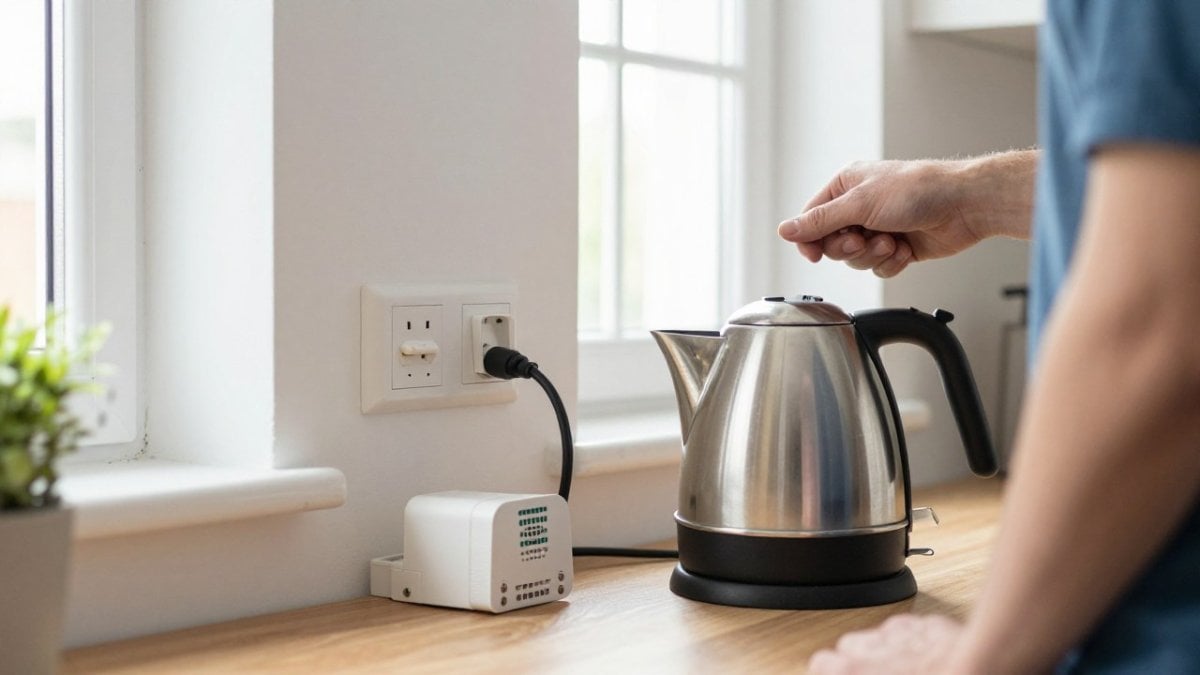
Kettles, toasters, microwaves, electric heaters and hair dryers draw a lot of power. Running a kettle and a microwave on the same socket circuit at the same time is a classic cause of trips.
Watch for these signs:
- The trip happens only when two or more big appliances run together
- Plugs or sockets feel warm to the touch
- You can smell hot plastic near a socket
- Extension leads are coiled up while in use
If this sounds familiar, spread your appliances across different sockets and circuits. Avoid daisy-chaining extension leads. A qualified electrician can check whether your circuits have enough capacity for how you use your home.
Faulty appliances, short circuits and earth faults
A faulty appliance is the next likely cause. Damaged cables, worn heating elements, or water getting inside an appliance can all cause a trip the moment you switch it on.
A short circuit happens when live and neutral wires touch. An earth fault, sometimes called a earth fault, happens when current leaks to earth through an unintended path. Both are dangerous and both can trip your electrics straight away.
To test for a faulty appliance:
- Switch everything off at the wall and note which circuit tripped
- Unplug all appliances on that circuit
- Reset the switch
- Plug in one appliance at a time and switch it on
- The one that trips the circuit again is your suspect
Stop using any appliance that trips the circuit. Check its cable and plug for damage. If you see scorch marks, cracks or exposed wire, do not use it again.
Understanding Which Switch Has Tripped: MCB, RCD or RCBO
Your consumer unit (sometimes called a fuse box) contains different types of protective switches. Each one reacts to a different problem, so knowing which one has tripped tells you a lot.
- MCB (Miniature Circuit Breaker): Protects a single circuit from overload and short circuits. If an MCB trips, one circuit has too much current or a short.
- RCD (Residual Current Device): Detects current leaking to earth and cuts power quickly. If an RCD trips, there may be an earth fault or a faulty appliance.
- RCBO (Residual Current Breaker with Overload): Combines the job of an MCB and an RCD in one device. It protects one circuit against both overload and earth faults.
Look at which switch has moved to the off position. Some consumer units show a clear mark or colour for each type. If you are not sure, take a photo before you touch anything and send it to an electrician.
Here is a quick guide to what each trip usually means:
| Switch that tripped | Usual cause | Your next step |
|---|---|---|
| MCB (single circuit) | Overload or short circuit | Reduce load, then check appliances |
| RCD (whole group) | Earth fault or faulty appliance | Unplug appliances, reset, test one by one |
| RCBO (single circuit) | Overload or earth fault on one circuit | Isolate that circuit’s appliances |
| Main switch | Serious fault or supply issue | Call an electrician |
Why Does My RCD Keep Tripping?
An RCD that keeps tripping is one of the most common worries. It means the device has found current leaking to earth.
RCDs are very sensitive by design. They are meant to protect you from electric shock. So a trip is a warning sign, not a fault in the RCD itself.
Start by unplugging every appliance on the circuit, then reset the RCD. If it holds, plug appliances back in one at a time.
Damp is a frequent cause. Outdoor sockets, garden lighting and kitchen appliances near water are common culprits.
How to Find an Appliance Causing a Power Trip
Finding the exact appliance is a process of elimination. You do not need to open the consumer unit to do it. Work safely, one step at a time.
- Note what was running. When the trip happened, which appliances were on? This narrows the list.
- Switch off the affected circuit. Turn off the circuit breaker first, then unplug the appliances on that circuit.
- Reset and test. Switch the breaker back on. If it holds with nothing plugged in, the fault is likely a fixed item or wiring.
- Add appliances one at a time. Plug in each appliance, switch it on, and wait a few minutes before adding the next.
- Repeat until it trips. The appliance that causes the trip is the one to stop using.
This method is safe as long as you only work on the breaker and plugs, never on exposed wires.
A common mistake is blaming the wrong appliance. Older kettles and heaters can work fine for years, then fail suddenly.
What to Do When the Fuse Box Trips
When the fuse box trips, the first thing to do is stay calm and check that the rest of your home is safe. Our guide to common fuse box faults and what they can mean explains the usual culprits behind repeated trips.
Follow this sequence:
- Check for any signs of damage, such as burning smells, scorch marks or sparks
- Turn off everything that was running when the trip happened
- Look at the switches in the consumer unit and find the one that has moved
- Push that switch fully to off, then back on
- If it trips again straight away, do not keep trying
Some trips will not reset at all. If the switch moves back to off immediately, there is a fault on that circuit. Leave it off and call an electrician.
Watch out: if the switch feels loose, smells hot, or there is any crackling from the consumer unit, stop and treat it as an emergency rather than a reset problem.
If the breaker will not reset or trips immediately
A breaker that trips the instant you reset it, with nothing plugged in, points to a fault in the fixed wiring or a fixed appliance on that circuit. A common pattern is a shower, immersion heater or outdoor light that has taken in moisture. Do not keep resetting it to ‘see if it holds’, each attempt puts the circuit back under fault conditions.
A simple response plan:
- Leave the affected breaker off
- Switch off and unplug anything on that circuit that you can safely reach
- If the circuit serves a fixed item you can isolate at a local switch (such as a shower isolator), turn that off too
- Try one reset only
- If it still trips, stop and book an electrician
If the trip is intermittent or time-dependent
Some faults only appear when a particular appliance runs, when heating starts, or at certain times of day. These are harder to find and are worth recording rather than guessing at. Keep a simple log of the time, what was running, and the weather if relevant. Patterns such as ‘only when the washing machine is on a hot wash’ or ‘only after rain’ give an electrician a strong head start and can cut diagnosis time.
If you see smoke, smell burning, or hear crackling from the consumer unit, turn off the main switch if it is safe to reach and leave the building until help arrives.
When to Book an Electrician for Tripping Electrics
Some trips are simple to fix yourself. Others mean you should stop and call a qualified electrician. Knowing the difference keeps you and your home safe.
Book an electrician if:
- The breaker will not reset, or trips straight away every time
- You cannot find the cause after working through the steps above
- The trips are getting more frequent over time
- You see burning, scorch marks, or hear buzzing from a socket or the consumer unit
- Your consumer unit is old, or has no RCDs at all
- You are renting out a property and need proof of electrical safety
What an electrician will actually do
A good electrician will not simply reset the breaker and leave.
Cost and urgency
Many people put off booking because they worry about cost. The honest answer is that the cost depends on what is found. Pricing for any job depends on the work needed, so the best way to know is to get a quote for your property from MDS Electrical’s website.
MDS Electrical is an established local electrician in Peterborough, rated among the top three in the area and with a wealth of Google reviews from homeowners and businesses. Our team works across domestic and commercial properties, from small repairs to full rewires. We keep appointments and provide a clear quote before any work starts.
Frequently Asked Questions
Why do my electrics keep tripping?
Electrics usually trip because a circuit is overloaded, an appliance has a fault, or there is a wiring problem such as a short circuit or earth fault. Overloading happens when several high-power appliances, such as a kettle, microwave and electric heater, draw more current than the circuit is rated for. A faulty appliance can leak current or short internally, causing the RCD or MCB to cut the supply for safety. If the trip repeats with nothing plugged in, the fault is likely in the fixed wiring and a qualified electrician should inspect it.
Is it safe to keep resetting a tripped circuit breaker?
Resetting a tripped breaker once is generally safe after you have unplugged the appliances on that circuit. However, if it trips again straight away or keeps tripping repeatedly, do not keep resetting it. Repeated tripping means a fault is present and the protective device is doing its job. Continuing to reset it can hide a dangerous problem such as damaged cable or overheating. Stop, leave the circuit off and arrange for an electrician to investigate.
Why does my RCD keep tripping?
An RCD (residual current device) trips when it detects a leakage of current, meaning electricity is flowing somewhere it should not, such as to earth. Common causes include a faulty appliance with damaged insulation, moisture in an outdoor socket or garden lighting, and a deteriorating cable. Disconnect everything on the circuit and reset the RCD. If it holds, reconnect items one at a time to identify the culprit. If it still trips with nothing connected, call a qualified electrician.
When should I call an electrician about tripping electrics?
Call a qualified electrician if the breaker trips immediately after resetting, trips repeatedly with no obvious cause, or if you notice a burning smell, scorch marks, sparks or warm sockets. Intermittent trips that only happen under certain conditions, such as in wet weather, also need professional diagnosis. Electrical safety is not something to guess at, so if you are unsure, book an inspection rather than waiting for a more serious fault to develop.