Table of Contents
- Assess Your Property’s Electrical Needs Before a Rewire
- Create a House Rewire Checklist
- What to Expect During a House Rewire
- How Long Does a House Rewire Take?
- Living in a House During a Rewire
- Key Questions to Ask Your Electrician
- Final Preparations Before Work Starts
- Frequently Asked Questions
Last Updated: October 16, 2026
Assess Your Property’s Electrical Needs Before a Rewire
Before you prepare for rewire, understand what your property actually needs. This step defines the entire project scope and cost. Many homeowners skip this and regret it later.
Start by identifying what’s wrong with your current system. Are lights flickering? Do circuits trip when you use multiple appliances? Is your fuse board outdated? These clues tell you what must change.
Check your property’s age and wiring type. Homes built before 1970 often have cloth-wrapped wiring that degrades over time. Properties from the 1980s might have rewirable fuses instead of circuit breakers. Modern homes sometimes just need selective upgrades, not full rewires.
Ask your electrician to inspect for signs of overheating around sockets and switches. Discoloured plastic or a burnt smell means circuits are overloaded, a clear sign you need work done soon.
Document any electrical issues you’ve noticed:
- Sockets that don’t work reliably
- Lights that dim when appliances start
- Buzzing or crackling sounds from the consumer unit
- Blown fuses or tripped breakers happening regularly
- Plugs that feel warm to the touch
We recommend having a qualified electrician assess your property before planning anything. This assessment identifies what must be replaced versus what can stay. It’s the foundation for your entire rewire strategy.
Create a House Rewire Checklist
A house rewire checklist keeps you organised and ensures nothing gets missed. Start building yours now, before work begins.
Safety and access preparations
Clear the areas where work will happen. Electricians need safe access to your consumer unit, loft space, and all walls where cables run. Remove furniture, boxes, and clutter.
Protect your valuables. Work creates dust and vibration. Move artwork, electronics, and fragile items away from work zones. Cover furniture with dust sheets if it can’t be moved.
Identify any hazardous materials in your home. Asbestos was common in older properties, particularly around pipe insulation and some electrical components. If you suspect asbestos, tell your electrician immediately, they’ll adjust their approach or recommend specialist removal first.
Prepare a safe workspace for the electrician’s tools and materials. A dedicated area, perhaps a hallway or spare room, keeps the job site organised and prevents accidents.

Documentation and permissions
Gather your property paperwork. Find your Building Regulations approval from any previous electrical work. If your property is listed or in a conservation area, check whether you need planning permission for a rewire.
Contact your local authority’s Building Control team if required. Some rewires need approval before work starts. It’s better to confirm this early than discover it halfway through.
Inform your insurance provider. Some policies require notification when major electrical work happens. A quick phone call prevents problems later.
Get written quotes from at least two electricians. Compare what they include, some quote labour only, others include materials and testing. A detailed quote shows you exactly what’s covered.
Never proceed without a fixed quote in writing. Vague estimates lead to disputes about final costs. Insist on a detailed breakdown before work begins.
Ask your electrician about the certification they’ll provide. A completed Electrical Installation Condition Report (EICR) or Installation Certificate proves the work meets current safety standards (Electrical safety standards in the private and social rented sectors: guidance). This matters for insurance, future sales, and rental properties.
What to Expect During a House Rewire
Understanding the process removes surprises. A rewire follows a logical sequence, though timings vary by property size and complexity.
First comes the survey and planning phase. Your electrician maps out where new cables will run and where outlets and switches will go. They’ll discuss your preferences, perhaps you want extra sockets in the kitchen or USB outlets in the bedroom.
Next, the old wiring gets removed. This is dusty and disruptive. Walls may need chasing (cutting channels for cables). Ceilings might require access holes. Your electrician will minimise damage, but some disturbance is inevitable.
New cables then get installed in the channels and through the loft. This is the longest part of the process. The electrician runs cables to every outlet, switch, and appliance location. Testing happens continuously to catch problems early.
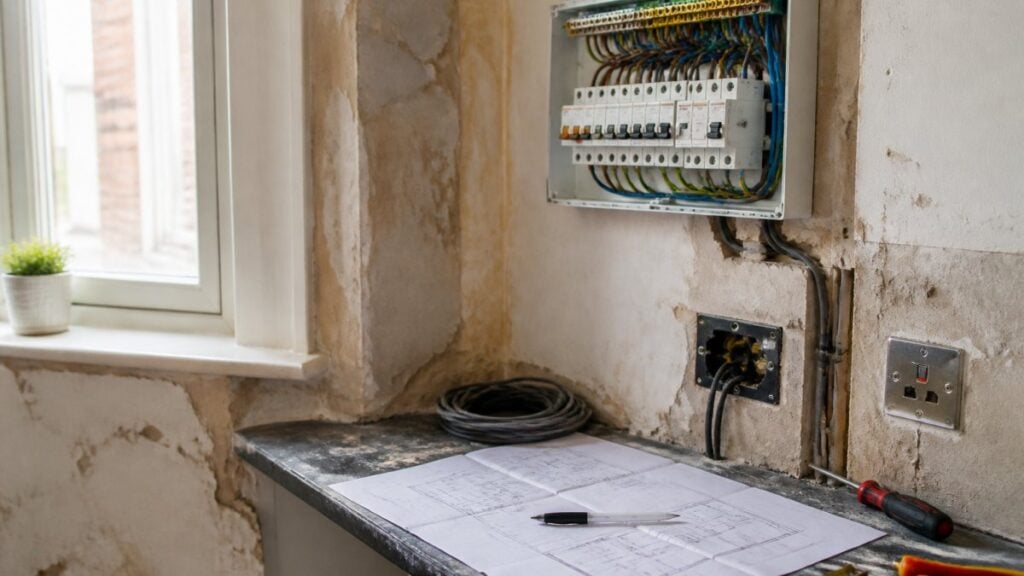
The consumer unit gets upgraded or replaced. This is often the most visible change. A modern unit with circuit breakers replaces old fuse boxes. It’s safer and more reliable.
Finally, all outlets, switches, and lights get connected. Testing and certification follow. Your electrician checks that every circuit works safely and meets current standards.
The entire process is methodical and staged. Nothing happens without testing and verification. This protects your home and ensures the work lasts decades.
How Long Does a House Rewire Take?
How long a house rewire takes depends on your property’s size and condition. A small two-bedroom terrace might take 5-7 working days. A large four-bedroom detached house could take 2-3 weeks. Listed buildings or properties with complications take longer.
The first day is survey and planning. The electrician assesses the property and discusses the approach with you. This sets expectations for the rest of the project.
Days two through final are the active work phase:
- Removing old wiring (1-3 days depending on how much needs to come out)
- Installing new cables (3-7 days for most homes)
- Fitting outlets, switches, and lights (2-4 days)
- Testing and certification (1 day)
Weather can affect timings if your electrician needs loft access. Heavy rain might delay work. Similarly, discovering unexpected issues, asbestos, structural damage, or rodent damage to cables, adds time.
Ask your electrician for a realistic timeline before work starts. A good estimate includes buffer time for unexpected problems. Tight schedules create stress and poor workmanship.
Living in a House During a Rewire
You can stay in your home during a rewire, but it requires planning. Prepare yourself and your family for disruption.
Managing daily routines and disruption
Expect noise from power tools, chasing walls, and hammering. It’s loudest during the active work phase. Early starts are common, most electricians begin at 8 am.
Plan your week around the work. If you work from home, arrange to work elsewhere on the noisiest days. If you have young children, consider whether they can stay with family during peak disruption.
Your electricity will be off for parts of each day. The electrician isolates circuits while working on them. Sometimes the entire house loses power while the consumer unit is being replaced. Plan meals that don’t require cooking. Have torches ready. Keep phone chargers topped up.
Heating might be affected if your boiler is electric. Discuss this with your electrician beforehand. Some properties need temporary heating arrangements.
Keep a camping stove or portable heater in reserve. If your boiler goes offline during work, at least you can heat water and stay warm.
Protecting your belongings and property
Dust and debris are inevitable. Close internal doors to contain the mess. Lay dust sheets under work areas. Remove or cover items you want to keep clean.
Electronics near work zones risk damage from vibration and dust. Move computers, televisions, and audio equipment away from the work area if possible.
Ensure your electrician has clear access to the consumer unit. This might be in a cupboard, under stairs, or in the garage. Clear the space completely so work can proceed without moving your belongings.
Agree on a daily tidy-up routine. Most electricians sweep up at the end of each day, but confirm this beforehand. A clean workspace is safer and more pleasant.
Key Questions to Ask Your Electrician
Before hiring, ask these questions. The answers reveal professionalism and experience.
How many rewires have you completed? Experience matters. An electrician who’s done dozens of rewires understands common problems and works efficiently.
What’s included in your quote? Does it cover all materials, testing, certification, and disposal of old wiring? Are there extra charges for unforeseen issues?
What certification will I receive? Ask for a Building Regulations Completion Certificate or an Electrical Installation Certificate. This proves the work meets current safety standards.
How do you handle unexpected problems? What happens if you discover asbestos, structural damage, or other complications? Will costs increase? How much notice do you give?
Can you provide references? Ask for contact details of recent customers. A reputable electrician happily provides them.
What’s your warranty? Do you guarantee your work? For how long?
How will you minimise disruption? Ask about their approach to dust control, noise management, and daily site clean-up.
What’s your payment schedule? Do you require a deposit? When is the balance due? What’s your payment method?
We answer these questions thoroughly. We’ve completed rewires across Peterborough and surrounding areas for over 12 years. Our customers know exactly what to expect before work starts.
Final Preparations Before Work Starts
The week before you prepare for rewire, take final steps to ensure everything runs smoothly.
Confirm the start date with your electrician. Confirm the expected duration and daily working hours. Ensure someone will be home to let them in each day.
Make a final walkthrough with your electrician if possible. Point out any concerns, pets, fragile items, areas that are off-limits. Clarify outlet and switch locations one last time.
Arrange alternative accommodation if you have young children or elderly relatives who’ll struggle with disruption. Even if you stay, a few nights elsewhere can reduce stress.
Take photographs of your current electrical setup. This creates a record for insurance purposes and helps document the before-and-after transformation.
Notify your neighbours that work will happen. Disruption isn’t just inside your home, noise travels. A courtesy heads-up prevents complaints.
Stock up on essentials. Arrange meals that don’t require cooking. Stock your freezer. Have bottled water on hand in case your water heater goes offline.
Clear your schedule for the first day. Be present when the electrician arrives to discuss the plan and answer questions. This sets the tone for the entire project.
A house rewire is a significant undertaking, but proper preparation makes it manageable. Know what your property needs, plan the logistics, and choose an electrician you trust. MDS Electrical has helped homeowners across the region navigate rewires safely and efficiently. We provide detailed quotes, keep to schedules, and deliver professional certification that protects your home for decades. Request a quote today and take the first step toward a safer, more reliable electrical system.
Frequently Asked Questions
Do I need to move out during a house rewire?
Not necessarily. Many homeowners stay in their properties during a rewire. However, you’ll experience power cuts during the work, and there will be disruption from drilling, dust, and tradespeople moving through your home. If you have young children, elderly relatives, or medical equipment that relies on electricity, you may want to arrange alternative accommodation. Discuss this with your electrician when booking, they can advise on the disruption level for your specific project and help you plan accordingly.
What should I move or cover before rewiring starts?
Clear furniture away from walls where cables will be installed, cover valuable items and electronics with dust sheets, move pets to a safe area away from the work zone, and remove items from cupboards and under stairs if the electrician needs access there. Protect artwork, mirrors, and delicate decorations. Ask your electrician which rooms will be affected most so you can prioritise what to move. This preparation keeps your belongings safe and allows the work to progress quickly without obstruction.
How long does a house rewire take?
The duration depends on your property’s size, age, and complexity. A small flat might take 3-5 days, whilst a larger house could take 2-3 weeks or longer. Older properties with original wiring often take longer because walls may need more extensive work. Your electrician will provide a realistic timeframe after assessing your home. Weather, unexpected complications, and the need for building regulation inspections can also affect the schedule, so build in buffer time when planning your life around the project.
What happens to the electricity during a rewire?
Your electricity will be switched off in stages as the electrician works on different circuits and areas. You won’t have power to lights, sockets, or appliances in those sections. Your electrician will usually arrange this to minimise disruption, for example, keeping certain rooms live whilst working on others. The main supply may be isolated entirely during final connection work. Plan for this by charging devices in advance, using battery-powered lighting, and avoiding activities that depend on electricity during those periods. Your electrician will give you a schedule so you can prepare.